

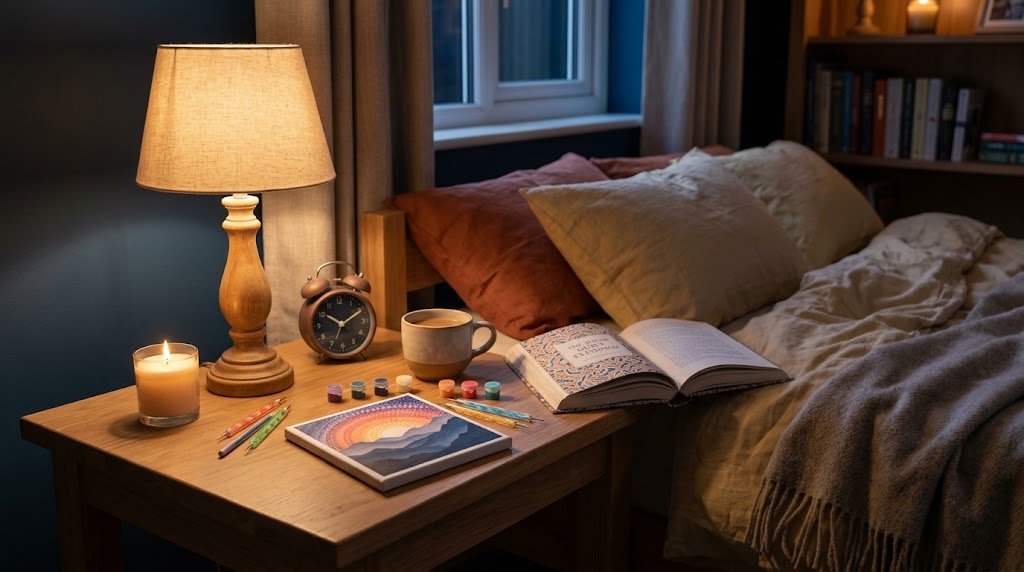
You get into bed feeling exhausted, but the moment your head hits the pillow, your mind is wide awake. For many people, the last hour before bed is spent answering messages, checking the news or watching one more episode. It feels relaxing, but it often leaves us wired instead of ready to sleep. A screen-free evening routine can change that. It gives your brain time to slow down and signals that the day is coming to an end. Here’s how to build one that actually works.
Why Screens Make It Harder to Sleep
Screens affect sleep in two main ways. First, the light from phones, tablets and laptops can interfere with the body’s natural wind-down process in the evening. Second, the content itself keeps your mind active. Emails, social media and news all demand attention and often trigger stress. The Sleep Foundation’s guide to sleep hygiene recommends a consistent pre-bed routine and limiting electronics before bed as simple habits that support better rest.
1. Set a Digital Sunset
Choose a fixed time each evening when screens go away, ideally 60 minutes before bed. Put your phone on charge in another room or in a drawer, and use a traditional alarm clock if you rely on your phone to wake up. The first few evenings may feel strange, but the habit becomes easier quickly.
2. Dim the Lights
Bright overhead lighting tells your body it’s still daytime. Switch to warm table lamps, candles or dimmable bulbs in the evening. Lower light creates a calmer atmosphere and naturally encourages you to slow down.
3. Pick a Hands-On Wind-Down Activity
The easiest way to stay off your phone is to keep your hands busy with something else. Calm, repetitive activities work best because they focus your attention without overstimulating it. Dot painting is a popular choice in Europe for exactly this reason. Kits from Dutch brands, such as those available at https://ohmydotz.nl/, include a pattern, paints and dotting tools, so you can settle in and start without any preparation. Other good options include knitting, jigsaw puzzles and adult coloring books.
4. Read a Paper Book
Reading is one of the oldest bedtime rituals for good reason. A physical book doesn’t send notifications, and a good story gently pulls your attention away from the day’s worries. Choose something enjoyable rather than work-related, and keep the book on your nightstand as a reminder.
5. Stretch or Do Gentle Yoga
A few minutes of light stretching releases tension built up during the day, especially in the neck, shoulders and back. Focus on slow movements and steady breathing. This isn’t a workout. The goal is to relax your body, not energize it.
6. Write Tomorrow’s To-Do List
Many people lie awake because they’re mentally rehearsing tomorrow. Writing down your tasks for the next day moves them out of your head and onto paper. Add one or two sentences about how the day went if you like. It’s a simple way to close the day and let go.
7. Give Your Evenings a Long-Term Project
Evenings feel more rewarding when you’re working toward something. A long-term creative project gives you a reason to look forward to your screen-free hour instead of seeing it as a restriction. Some people choose a custom dot painting from your photo, such as a favorite holiday picture or a portrait of a pet, and work on a small section each night. Watching the image slowly appear over several weeks is motivating, and you end up with something meaningful to hang on the wall.
A Sample 60-Minute Evening Routine
Here’s an example of how you could structure the last hour before bed:
- 60 minutes before bed: phone away and lights dimmed.
- 50 minutes before bed: 30 minutes of a calm hobby, such as painting, knitting or a puzzle.
- 20 minutes before bed: 5 minutes of stretching and writing tomorrow’s to-do list.
- 15 minutes before bed: prepare for bed and read until you feel sleepy.
Adjust the timing to suit your schedule. The most important part is doing it in roughly the same order every night, so your body learns to recognize the routine.
How to Make the Habit Stick
Start with small changes rather than a complete overhaul. Try a screen-free half hour first, then extend it once it feels natural. Keep your chosen activities ready and visible, so there’s no effort involved in starting them. If you live with a partner or family, invite them to join you. A shared screen-free evening is much easier to maintain than a solo one, and it creates more quality time together.
Frequently Asked Questions
How long before bed should I stop using screens?
Many sleep experts suggest putting screens away 30 to 60 minutes before bed. If that feels difficult, start with 15 minutes and gradually increase the time.
What can I do instead of scrolling at night?
Calm, hands-on activities are the best replacements. Reading, dot painting, knitting, journaling, stretching and puzzles all keep you occupied without overstimulating your mind.
Does night mode on my phone solve the problem?
Night mode reduces some of the light, but it doesn’t change the stimulating content you’re consuming. A true screen-free period is more effective for winding down.
How long does it take to see results from a new routine?
Many people notice they feel calmer within the first week. Better sleep often follows after a couple of weeks of consistency.
Final Thoughts
A screen-free evening routine isn’t about giving something up. It’s about making room for activities that actually help you relax. Set a digital sunset, choose a calm hobby and give your mind the quiet hour it needs. Your sleep, and your mood the next day, will thank you.