

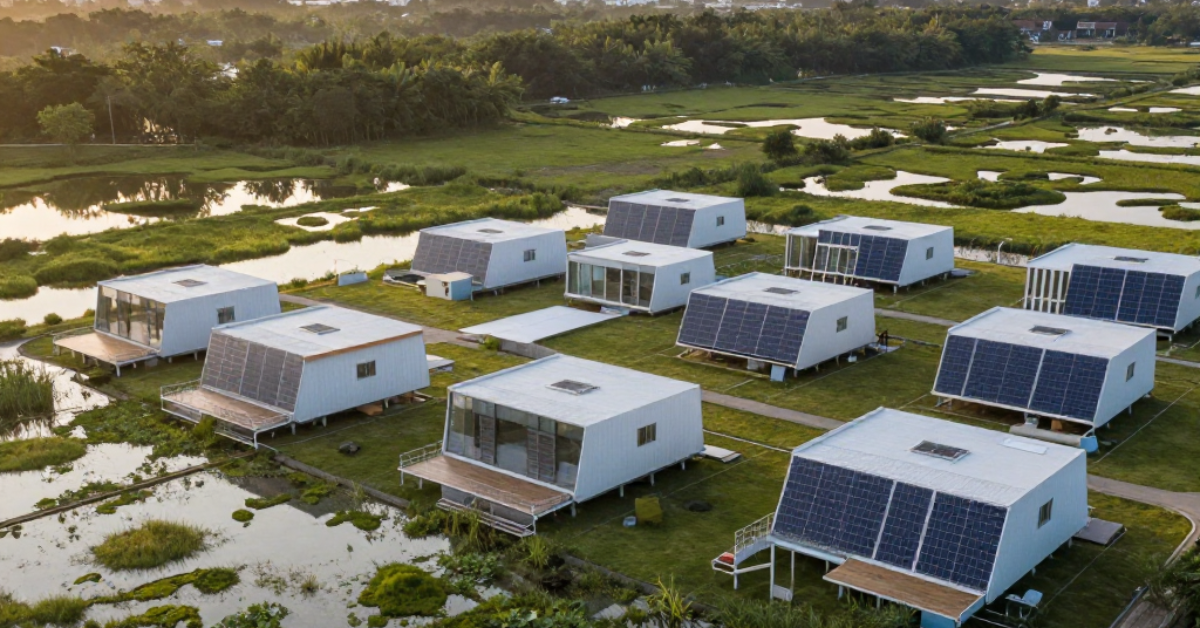
Lufanest is an uncommon and potentially emerging term whose meaning depends heavily on the context in which it appears. Unlike established technical concepts with widely documented definitions, the word does not have one universally recognized meaning across technology, architecture, sustainability, or design.
The available interpretation of the term is largely conceptual. It can be understood as a name or expression associated with ideas such as adaptability, organization, interconnected systems, and the relationship between structure and natural environments. However, it is important not to present these interpretations as an officially established definition unless a specific source or organization defines the term that way.
This distinction matters because unfamiliar words can originate from branding, creative projects, online communities, naming experiments, or newly developing concepts. Understanding the context in which Lufanest is encountered is therefore essential to determining what the term actually means.
What Does Lufanest Mean?
There is no single, universally accepted dictionary or technical definition of Lufanest. The term appears to have a constructed or conceptual character, which means its intended meaning may differ according to its source. Treating it as a fixed scientific, architectural, or technological system without supporting evidence would be misleading.
One possible interpretation is that the word evokes the idea of a nest—something organized, protective, interconnected, and capable of supporting development. The “nest” concept can naturally be associated with structure, containment, adaptability, and an environment designed around particular needs.
From a conceptual perspective, these qualities can be useful when discussing modern systems that need to balance stability with flexibility. A well-designed digital platform, building, community, or organizational framework may require clearly defined structures while still allowing components to change as circumstances evolve.
Therefore, the most responsible way to describe Lufanest is as an emerging or context-dependent term rather than a universally established technical discipline.
Linguistic and Conceptual Interpretation
The construction of an unfamiliar word can provide clues about how people may intend to use it, but word structure alone does not establish an official etymology. For this reason, proposed interpretations of the individual components of Lufanest should be treated as conceptual rather than historical linguistic facts.
The second part, “nest,” has a relatively recognizable symbolic meaning. Across ordinary language and metaphorical usage, a nest can represent shelter, organization, interconnectedness, growth, and protection. These associations make it a natural metaphor for systems designed to provide a structured environment.
The first part, “Lufa” or “Lu,” is less certain. Without an authoritative source explaining its origin, assigning it a definitive meaning would be speculative. It could represent a creative naming element, an abbreviation, a reference to another language, or simply a component chosen for branding or sound.
This uncertainty is actually important when researching unusual terminology. A credible explanation should separate documented meaning from reasonable interpretation rather than turning speculation into fact.
Lufanest and Adaptive System Design
One useful way to understand the concept is through the broader principle of adaptive system design. Modern systems increasingly need to respond to changing users, environments, technologies, and operational requirements. Instead of relying entirely on rigid structures, adaptive approaches allow individual components to change while maintaining an overall framework.
A Lufanest-like conceptual model could therefore be described through several characteristics:
- Modularity: Components can operate as distinct units while remaining connected.
- Adaptability: The system can respond to changing circumstances.
- Organization: Complexity is arranged within recognizable structures.
- Scalability: Additional components can potentially be introduced without redesigning everything.
- Human-centered thinking: The system remains focused on practical needs and usability.
These principles are not exclusive to Lufanest. They are already relevant to areas such as software architecture, organizational design, urban planning, product development, and environmental engineering. The value of using an unfamiliar conceptual term depends on whether its source provides a specific framework that adds something meaningful to those established ideas.
Possible Applications in Design, Technology, and Sustainability
Because the term does not have a universally standardized definition, its possible applications should be described carefully. If Lufanest is being used as a design metaphor, its central ideas could potentially be applied to environments where flexibility and organization are both important.
In digital design, for example, the underlying idea could relate to modular platforms, structured information, interconnected services, or user experiences that can evolve over time. A system may have clearly defined boundaries while allowing individual elements to be modified or expanded.
In architecture and sustainability, the nest metaphor can similarly suggest spaces that provide protection while responding to their surrounding environment. Concepts such as passive design, modular construction, efficient resource use, adaptable floor plans, and environmentally responsive buildings are already established fields and should be discussed using their recognized terminology.
| Area | Possible interpretation | Established related concept |
|---|---|---|
| Digital systems | Organized and adaptable components | Modular architecture |
| User experience | Flexible structures around user needs | Human-centered design |
| Architecture | Protective and adaptable spaces | Adaptive architecture |
| Sustainability | Efficient use of resources | Sustainable design |
| Urban planning | Systems capable of responding to change | Resilient urban development |
| Business strategy | Flexible structures for changing conditions | Organizational adaptability |
This approach makes the discussion more useful because it connects an unfamiliar term with established disciplines without claiming that those disciplines formally recognize Lufanest as their own methodology.
Why Context Matters When Understanding Lufanest
The biggest challenge with an uncommon term is determining where it originated and how its creator intended it to be understood. Search results, social media posts, websites, branding materials, and individual articles can sometimes use the same word in completely different ways.
For readers encountering Lufanest for the first time, several questions can help establish its meaning:
- Where did the term first appear?
- Is it associated with a particular person, company, project, or publication?
- Does an original source provide a definition?
- Is it being used as a brand name, concept, product, or metaphor?
- Are independent sources using the term consistently?
- Does the surrounding content explain its intended purpose?
These questions are especially important for unfamiliar keywords because repeated descriptions online do not automatically make a definition authoritative. Several websites can reproduce the same unsupported claim, creating the appearance of consensus when there may be no original evidence behind it.
A trustworthy explanation should therefore identify uncertainty instead of presenting assumptions as established facts. This is particularly important when discussing new terminology that may still be developing.
Future Relevance of the Concept
Whether Lufanest develops into a recognized concept depends on how the term is actually used, documented, and adopted over time. New terminology can become meaningful when researchers, businesses, designers, communities, or other groups consistently use it to describe a specific idea.
The broader principles associated with the term—adaptability, modularity, environmental awareness, and interconnected systems—are already highly relevant. Digital infrastructure is becoming more complex, buildings increasingly incorporate environmental considerations, and organizations need to respond rapidly to changing conditions.
However, these developments should not automatically be described as applications of Lufanest. A distinction should remain between established trends and a potential interpretation of an emerging term.
If a reliable primary source eventually establishes a precise definition, the meaning and applications of Lufanest can be described more confidently. Until then, viewing it as a context-dependent or conceptual expression is the more accurate approach.
Conclusion
Lufanest is best approached as an uncommon and context-dependent term rather than a universally established technical concept. Its possible associations with nests, adaptability, organization, and interconnected systems provide an interesting conceptual framework, but these interpretations should not be confused with a formally recognized definition.
The most useful way to understand the term is to examine the source where it appears and determine whether it represents a brand, project, creative expression, design philosophy, or another specific idea. Connecting it with established concepts such as modular design, adaptive systems, human-centered development, and sustainability can provide useful context without overstating what is currently known.